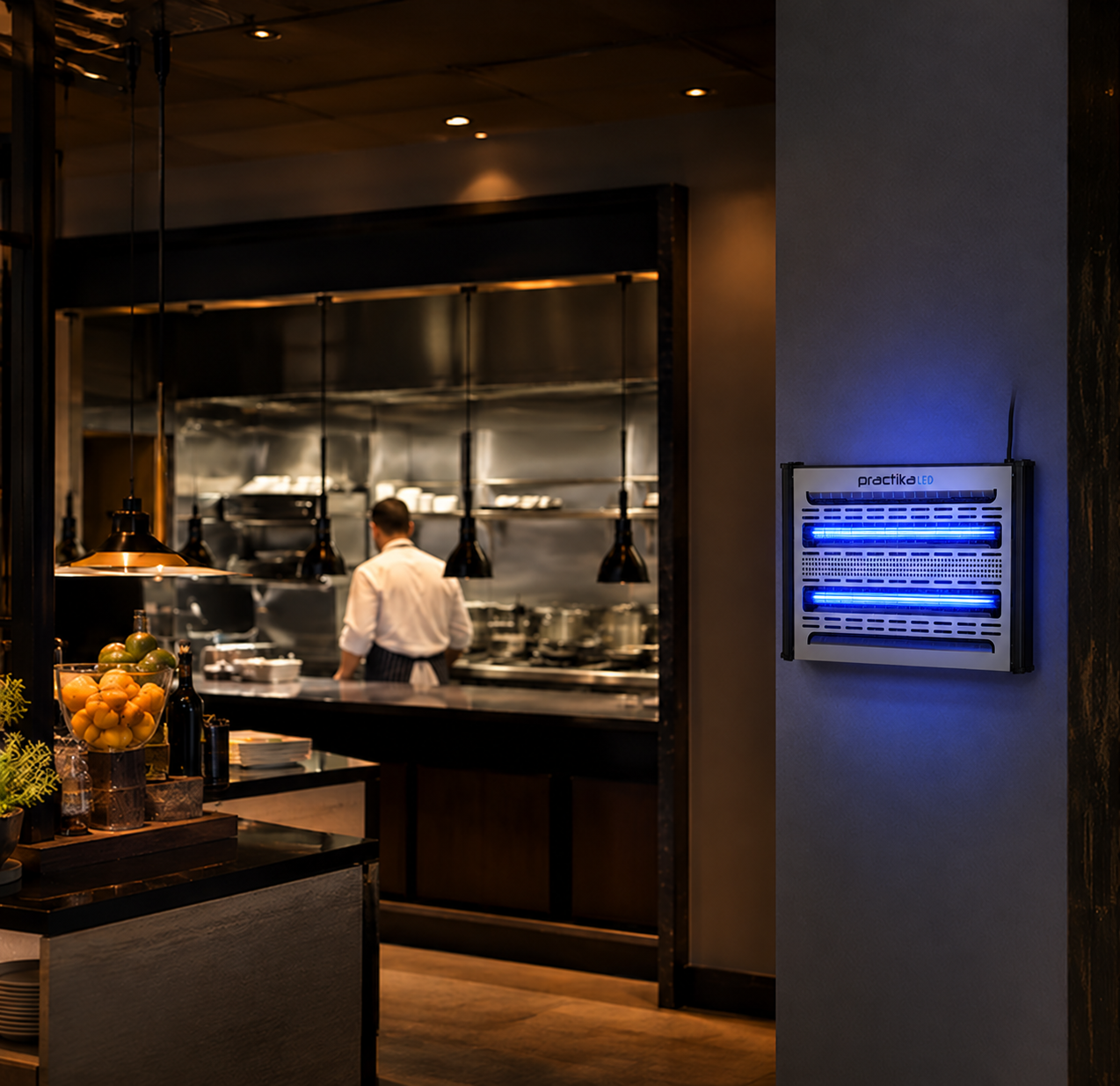
Correct positioning of a UV insect killer is key to effective flying insect control in professional settings. Even a high-quality unit can be less effective if it is installed in the wrong place, too high or in an area with unfavourable airflow.
In restaurants, hotels, kitchens and other HoReCa premises, the aim is to place the unit where it will attract insects before they reach food preparation areas, guests or other sensitive parts of the venue.
Choose the right location
A UV insect killer should not be installed at random. You need to take into account entrances, windows, light sources, the layout of the space and the places where insects appear most often.
The best results are achieved when the unit is placed so that it draws insects from their natural flight path without being directly exposed to strong daylight.
When planning its position, pay attention to:
- proximity to entrances and windows
- installation height
- airflow direction
- distance from food preparation areas
- exposure to direct sunlight
- ease of maintenance and replacement of consumable parts
Height and surroundings affect effectiveness
A unit mounted too high may be less effective, as most flying insects move at lower heights. On the other hand, a UV insect killer mounted too low can get in the way of staff or guests and be impractical for everyday use.
It is also important to avoid spots right next to air vents or in strong air currents, as moving air can change the direction insects fly in and make the unit less effective.
A well-positioned UV insect killer should be visible to insects while blending discreetly into the space.
Regular maintenance is just as important as positioning
Even a correctly positioned UV insect killer will not stay at maximum effectiveness without regular maintenance. Over time, UV tubes lose intensity, even though they may still appear to light up normally.
Regularly checking the unit, replacing the UV light sources as recommended by the manufacturer and cleaning or replacing the glue boards all help to maintain reliable protection throughout the year.
In professional settings, the best results come from a combination of choosing the right unit, positioning it well and maintaining it regularly. That way the system becomes part of everyday hygiene on the premises rather than just an extra piece of equipment.