Facts
Ultraviolet (UV) light is part of the electromagnetic (EM) spectrum: it has a higher frequency than visible light but a lower one than X-rays. Wavelengths in the ultraviolet part of the spectrum range from just a few nanometres (nm) to several hundred nm, which corresponds to frequencies of the order of 1014 Hz to 1017 Hz. Here, as in other parts of the spectrum, the boundaries are not sharply defined. Ultraviolet rays consist of high-energy photons. UV light is divided into three bands (UV-A, UV-B and UV-C), which differ from one another in frequency, or wavelength, and therefore in energy. The Sun is the largest natural source of UV radiation.
-
UV light
In the electromagnetic (EM) spectrum, ultraviolet (UV) light occupies a range of frequencies higher than those of visible light but lower than those...
-
Insects are dirty creatures
Insects land and feed in unclean places, swallowing various pathogens or carrying them on their bodies. Because they are highly mobile, they quickly...
-
HACCP standard
HACCP (Hazard Analysis and Critical Control Points) is a system of control over food production and distribution processes, which enables: Identifying...
UV light
In the electromagnetic (EM) spectrum, ultraviolet (UV) light occupies a range of frequencies higher than those of visible light but lower than those of X-rays.
Wavelengths in the UV range extend from a few nanometres (nm) up to several hundred nm, corresponding to frequencies of the order of 1014 Hz to 1017 Hz. The boundaries of this range, like those of other parts of the spectrum, are not sharply defined.
UV rays consist of high-energy photons.
Ultraviolet light is divided into three sub-ranges (UV-A, UV-B and UV-C), which differ from one another in frequency, i.e. wavelength, and therefore also in energy. Of all natural sources, the Sun emits the most UV radiation.
Insects are dirty creatures
Insects land and feed in unclean places, swallowing various pathogens or carrying them on their bodies. Because they are highly mobile, they quickly and easily carry these pathogens from their dirty habitats into our food chain. If an insect (a fly, for example) lands on food or in an area where food is prepared, it will contaminate them with a host of pathogens causing various diseases. Contact with insects can cause several kinds of disease, some of which are highlighted here:
E. coli
According to research, insects are among the biggest carriers of this bacterium
Salmonella
It is the most common cause of food poisoning and can survive in the bloodstream of the common fly
Campylobacter
This bacterium has been isolated from many insect species
Klebsiella
It causes various urinary and respiratory tract infections and often lives in the intestines of flies
Streptococcus
It is associated with numerous skin and intestinal diseases
Meningitis
The cause of this deadly disease has been isolated from the intestines of the common housefly
The legs of a common fly can carry up to 6,000,000 bacteria. In just two weeks, a fly can lay more than 1,000 eggs. Flies lay their eggs and develop on rubbish dumps, in waste, in households, in farmyard manure and in similar places.
HACCP standard
HACCP (Hazard Analysis and Critical Control Points) is a system of control over food production and distribution processes, which enables:
- Identifying and assessing all potential hazards, that is, every physical, chemical or microbiological risk, at every stage of food production;
- Determining the measures needed to prevent these hazards and keep them under control;
- Ensuring that these measures are implemented successfully and effectively.
- The HACCP system has two basic components:
- HA is hazard analysis – at every stage of food production, hazards are identified and their significance for human health is assessed.
- CCP (critical control points) refers to the stages of production at which a food safety risk can be prevented or eliminated altogether, or its impact reduced to an acceptable level, and at which it is kept under control.
HACCP applies to all types of food products and to all stages of food production and handling.
HACCP is required in the following branches of the food industry:
- Food production, processing and packaging;
- Storage, transport and distribution;
- Food preparation and distribution for hospitals, childcare facilities, hotels, restaurants, airlines and the like;
- Retail and hospitality;
- Organic food production.
Why apply HACCP
For food producers, HACCP is extremely important from the point of view of consumer protection, as it ensures that the food produced and sold is safe to eat. It is widely applied in developed countries around the world, and in the European Union it is required by law (Council Directive 93/43/EEC), so the system is mandatory for anyone exporting to EU Member States.
The aim of HACCP is to obtain the safest possible product by applying the safest possible process. It follows that HACCP does not always guarantee consumers 100% protection, but thanks to it a company produces or prepares food in the best and safest possible way.
Supplying consumers with safe, high-quality food is becoming increasingly important all over the world. That is why importers from the EU and other developed countries (the USA, Japan and others) require food safety, from field and farm all the way to final packaging, to comply with strict hygiene rules.
In the EU, the HACCP safety system must be introduced by anyone who owns, manages or works in food production. The directive obliges importers to source only higher-quality, safer food products and also to demand continuous improvement of production in the countries of origin. EU food businesses are now far more selective when choosing suppliers outside the Union and require them to apply HACCP consistently in their countries of origin.
To maintain business relationships, additional hygiene requirements sometimes have to be met for certain product groups, such as meat, milk and dairy products. In addition, food companies from the EU and other industrialised countries will not buy even raw materials from abroad unless they have a guarantee that the product processed in their plants will be safe for human consumption. A raw material or processed product will be rejected on the mere suspicion that it is infected or contaminated. For all these reasons, introducing the HACCP system is also highly necessary in domestic food companies.
HACCP is not limited to large manufacturing companies and industrial complexes: it can also be effectively introduced in medium-sized and small businesses, cooperatives, hotels and restaurants, where food safety is of crucial importance.
The principles on which the HACCP system is based:
- Analysing potential hazards.
- Determining critical control points (CCPs).
- Setting critical limits for each CCP.
- Introducing a monitoring system for each CCP.
- Defining corrective actions for deviations from critical limits.
- Establishing procedures to verify the system.
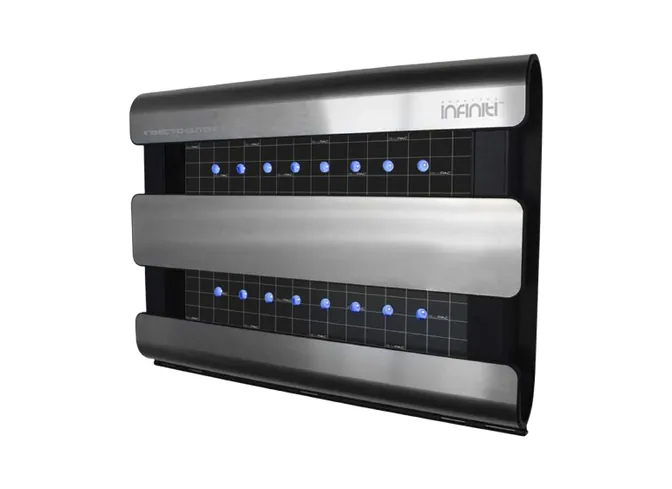
European leader in the design and manufacture of high-quality flying insect control units
In the insect control market, the P+L brand is known for its unique solutions and innovations, as confirmed by the leading role it has played in this field for almost three decades. Its extensive range includes several of the most highly regarded insect killer models, which over the years have practically become brands in their own right.
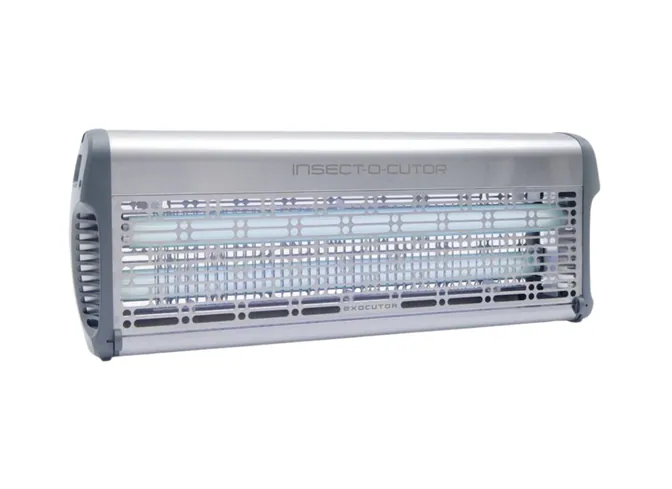
The market is led by the Exocutor™, the best-selling unit in Europe, followed by the Flytrap Professional™, the most effective unit. Because it meets the most important criteria – high effectiveness in controlling flying insects, high build quality and, of course, price – the P+L product range can offer an effective solution to insect problems in any environment.
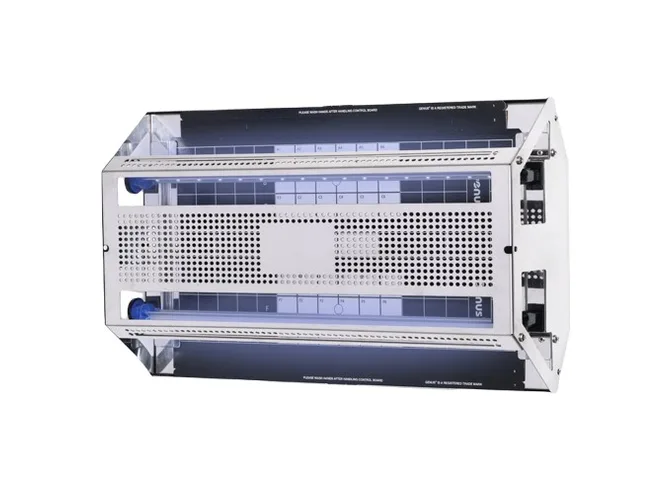
The insect control units are divided into 4 categories: electric grid units (which kill insects on an electrified grid), glue board units (which catch insects on a sticky surface), decorative units and units for preventive protection, all of which provide the necessary level of protection in different conditions. Each category contains units adapted to the specific requirements of the spaces where they are used, developed on the basis of twenty-five years of experience in manufacturing and using such units.
Thanks to an extensive distribution network covering 6 continents and more than 60 countries, P+L is a world leader in manufacturing, distribution and customer support. Well-stocked distribution centres in northern and southern Europe make it possible to deliver any type of unit to any part of the continent in the shortest possible time.